tips
How Parents Can Prompt Nano Banana 2 for Children's Drawings
A practical parent guide to turning a child's drawing into a cleaner, consistent illustration style with better prompts and safer sharing habits.

How Parents Can Prompt Nano Banana 2 for Children's Drawings
If you want to turn your child's sketch into a polished picture without losing its charm, the prompt matters as much as the upload. Many parents type something vague like "make this better" and then wonder why the result looks generic, too old, or nothing like the original drawing.
The better approach is to tell Nano Banana 2 exactly what should stay, what should change, and what kind of style you want. That gives you a much better chance of getting a result that still feels like your child's idea.
Small privacy note: if you upload a drawing, photo, or prompt into Nano Banana 2, that data is sent to Google for processing. Avoid uploading sensitive private information unless you are comfortable sharing it there.
Start With What Must Stay The Same
Before you ask for a prettier version, identify the parts that make the drawing special:
- the character itself
- the facial expression
- the colors your child picked
- any funny details like giant shoes, rainbow hair, or a tiny pet dragon
If you do not explicitly protect those details, the model may replace them with something more generic.
Try wording like this:
Keep the original character design and pose from my child's drawing. Preserve the pink dress, the big round eyes, the small yellow crown, and the smiling sun in the corner.
That single instruction usually improves results more than adding five fancy art terms.
Ask For One Clear Style
Parents often get messy outputs because they combine too many styles in one prompt. Pick one direction and stay consistent.
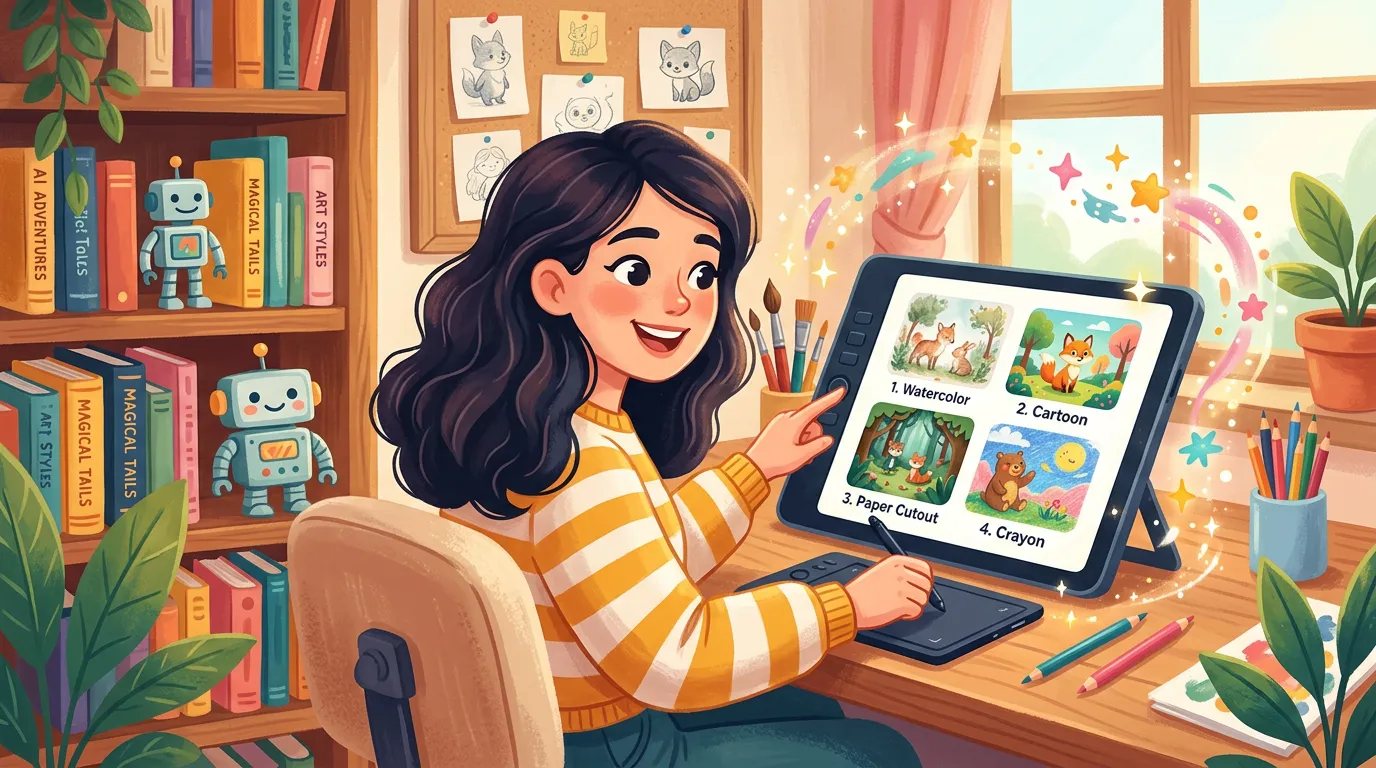
Good style directions for children's art:
- soft watercolor picture book
- colorful crayon illustration
- gentle hand-painted storybook art
- simple cut-paper collage look
- bright cartoon style for ages 4 to 7
Instead of this:
Make it Disney Pixar watercolor anime but realistic and magical.
Use this:
Turn this child's drawing into a soft watercolor children's book illustration with gentle colors, clean shapes, and a warm playful mood.
Tell It The Child's Age Range
This is an easy win. If the image is for a toddler, preschooler, or early reader, say so directly. The model will usually make better choices for expressions, scene complexity, and colors.
Example:
Create this as an illustration for a children's picture book for ages 4 to 6. Keep it friendly, simple, colorful, and easy to understand.
Use A Structure That Works
For most parents, this prompt structure is enough:
- What the image is.
- What must stay the same.
- What style to use.
- What mood to create.
- What to avoid.
Here is a reliable example:
This is my child's drawing of a happy little fox holding a balloon. Keep the original fox design, orange body, oversized ears, blue balloon, and playful expression. Turn it into a soft children's storybook illustration in watercolor style. Keep the scene simple, warm, and cheerful for ages 3 to 6. Do not make it realistic, scary, overly detailed, or dark.
How To Create A Consistent Style From Your Kid's Art
If you want to make several images that all feel like they belong in the same book, consistency becomes more important than raw creativity.
Use the first successful prompt as your base prompt, then repeat the same style language every time. Keep these parts stable:
- the style phrase
- the mood
- the color direction
- the character description
- the age range
For example, if the first image works, reuse this core line in every later prompt:
Use the same soft watercolor picture-book style, warm pastel colors, simple backgrounds, and gentle child-friendly character proportions.
Then only change the action:
- now the fox is riding a bicycle
- now the fox is in bed reading
- now the fox is in the garden with butterflies
That is the simplest way to create a style system from your child's ideas instead of generating random one-off images.
Best Prompt Templates For Parents
Template 1: Clean Up A Drawing
Turn this child's drawing into a polished children's book illustration. Keep the original composition, character design, and colors. Make the lines cleaner and the image more readable. Keep it playful, soft, and age-appropriate for young children.
Template 2: Preserve The Kid-Made Feeling
Improve this drawing while keeping the handmade childlike charm. Do not redesign the character too much. Keep the funny proportions and simple shapes. Render it as a cheerful crayon-style picture book image.
Template 3: Build A Reusable Family Style
Use this drawing as the reference for the character and overall visual style. Create a children's book illustration with the same character identity, same color palette, and same playful mood. Keep the style consistent across future scenes.
What To Avoid
These are the most common parent mistakes:
- asking for too many styles at once
- forgetting to say what must stay unchanged
- not stating the child audience
- using prompts that are only "make it better"
- uploading photos or drawings that include private information in the background
If the drawing has names, school logos, addresses, or family photos nearby, crop those out first.
A Better Way To Think About It
The goal is not to make the art look more "AI." The goal is to keep your child's imagination and give it a clearer, more usable visual form. The best result still feels like your kid invented it. It just looks cleaner, more consistent, and more storybook-ready.
If you are building a full children's book, the strongest workflow is:
- Start with your child's original drawing or character idea.
- Lock one visual style early.
- Reuse the same style language in every prompt.
- Protect the character details every time.
- Remove private information before uploading anything.
That combination gives parents much better results than chasing the "perfect AI image" from scratch.
Want to turn your child's ideas into a full storybook instead of prompting page by page? Create a personalized children's book with consistent characters, story flow, and illustrations.